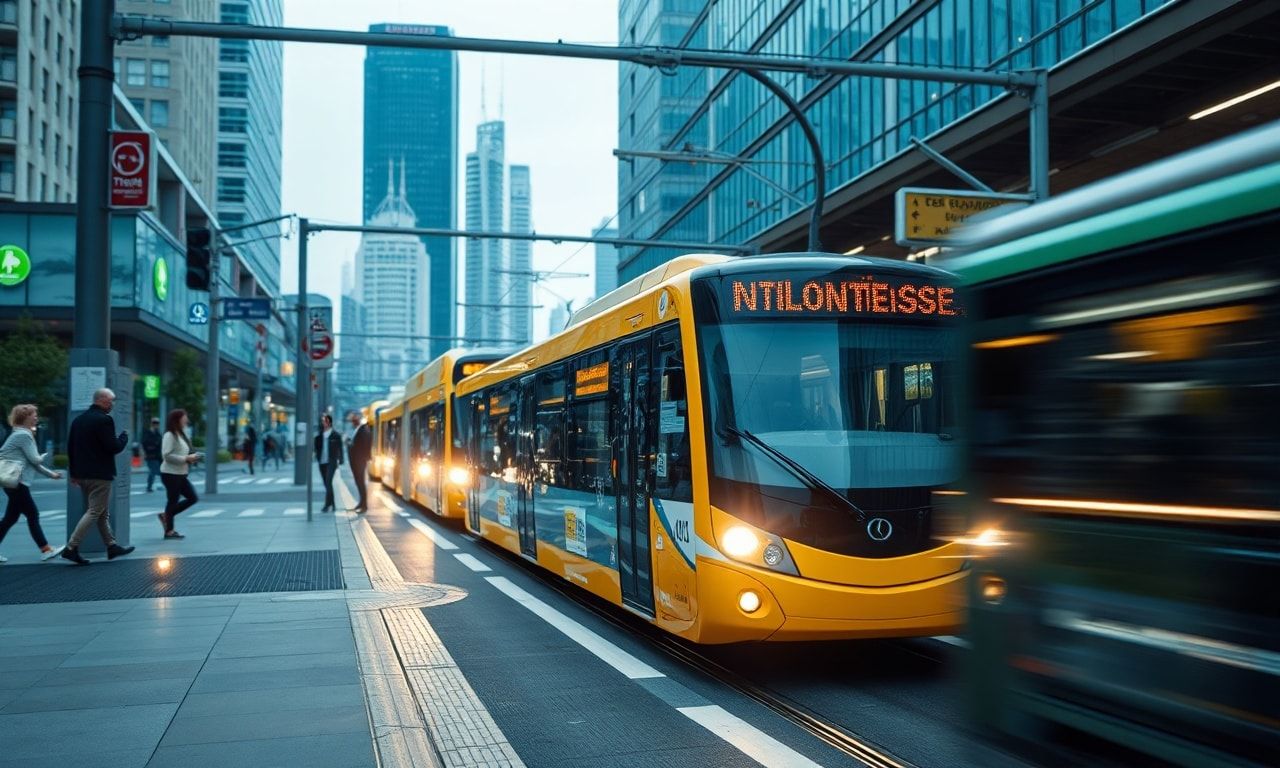
The Evolution of Public Transportation
Public transportation has come a long way from the horse-drawn carriages of the 19th century. Today, we stand on the brink of a new era, where artificial intelligence (AI) and the Internet of Things (IoT) are transforming urban mobility. Cities around the world are leveraging these technologies to create smarter, more efficient, and sustainable transportation networks. This article explores the cutting-edge innovations that are reshaping public transit, with a particular focus on AI and IoT applications.
The Role of AI in Public Transportation
AI is playing a pivotal role in enhancing the efficiency and reliability of public transportation systems. Machine learning algorithms analyze vast amounts of data to optimize routes, predict demand, and reduce congestion. For instance, AI-powered predictive maintenance systems can foresee equipment failures before they occur, minimizing downtime and improving service reliability. Additionally, AI-driven chatbots and virtual assistants provide real-time information and support to passengers, enhancing the overall user experience.
AI in Demand Forecasting
One of the most significant applications of AI in public transportation is demand forecasting. By analyzing historical data, weather conditions, and real-time events, AI algorithms can accurately predict passenger demand. This enables transit authorities to adjust schedules and deploy resources more effectively. For example, during peak hours, AI can recommend increasing the frequency of services to reduce overcrowding. Conversely, during off-peak hours, it can suggest reducing the number of vehicles in operation to save costs.
AI in Route Optimization
AI is also revolutionizing route optimization. Traditional route planning methods rely on static data and predefined schedules, which often lead to inefficiencies. AI, on the other hand, uses real-time data from sensors, GPS, and other IoT devices to dynamically adjust routes. This not only reduces travel time but also minimizes fuel consumption and emissions. For instance, AI-powered systems can reroute buses to avoid traffic congestion or road closures, ensuring a smoother and more efficient journey for passengers.
The Impact of IoT on Public Transportation
The Internet of Things (IoT) is another game-changer in the realm of public transportation. IoT devices, such as sensors and smart meters, collect and transmit data in real-time, enabling transit authorities to monitor and manage their networks more effectively. From smart tickets to connected vehicles, IoT is transforming every aspect of public transit. One notable example is the integration of IoT in the birmingham tram service news, where smart sensors and data analytics are used to improve service reliability and passenger experience.
IoT in Smart Ticketing
Smart ticketing systems powered by IoT are simplifying the way passengers pay for their journeys. These systems use contactless cards, mobile apps, and biometric authentication to enable seamless and secure transactions. IoT-enabled smart tickets can also store and analyze passenger data, providing valuable insights into travel patterns and preferences. This data can be used to personalize services, offer targeted promotions, and improve overall customer satisfaction.
IoT in Vehicle Connectivity
IoT is also enhancing vehicle connectivity, enabling real-time communication between vehicles and infrastructure. Connected vehicles equipped with IoT sensors can share data on speed, location, and road conditions with traffic management systems. This data can be used to optimize traffic signals, reduce congestion, and improve safety. For example, IoT-enabled buses can communicate with traffic lights to request green signals, reducing travel time and improving efficiency.
The Future of Urban Mobility
The future of urban mobility lies in the integration of AI and IoT technologies. As cities continue to grow and evolve, the demand for efficient, sustainable, and reliable public transportation will only increase. AI and IoT offer powerful tools to meet these challenges, enabling transit authorities to create smarter, more connected, and more responsive transportation networks. From AI-driven demand forecasting to IoT-enabled smart ticketing, the possibilities are endless.
In conclusion, the future of urban mobility is bright, thanks to the transformative power of AI and IoT. As these technologies continue to evolve, we can expect to see even more innovative solutions that enhance the way we travel. Whether it’s through AI-powered route optimization or IoT-enabled smart ticketing, the journey towards smarter, more efficient, and sustainable public transportation has only just begun.
Discover how cutting-edge tech is driving climate solutions in our latest feature, tech for sustainable future, exploring innovations from AI to cybersecurity.